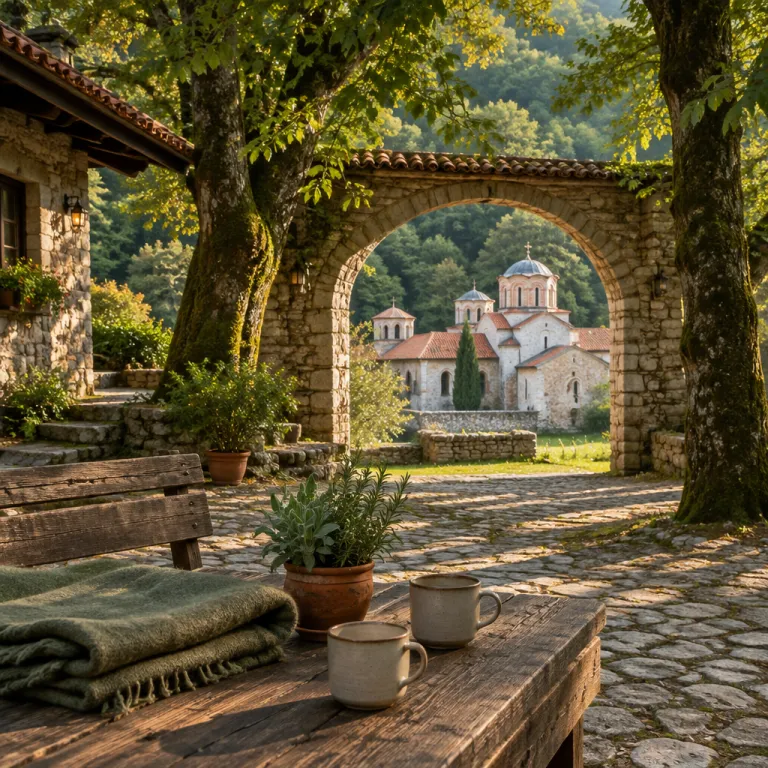
Planning a refined Serbia monastery tour from Belgrade
Begin your Serbia monastery tour in Belgrade, where riverside luxury hotels and characterful guesthouses make ideal bases before you head south into the Raška valley. From the capital to Studenica Monastery the drive usually takes around three and a half hours (about 230 kilometres via the A2 and regional roads), so plan an early departure with a comfortable sedan or SUV and a driver who knows medieval Serbia’s backroads. This first stretch sets the rhythm for a journey where travel time is not an inconvenience but part of the experience, linking churches, caves and landscapes that still echo with stories from the Middle Ages.
The classic monastery tour route runs in a loose triangle between Kraljevo and Novi Pazar, connecting Studenica, Žiča and Sopoćani monasteries in a single elegant loop. Distances are modest — usually under 90 kilometres between monasteries — yet road conditions vary, so your private tour car should be well maintained and your itinerary should include generous pauses for slow walks and quiet visits. Many travellers choose a private driver guide, turning what could be a rushed day trip into a curated sequence of monastery visits that reveal how Serbian medieval rulers used churches to anchor both faith and power.
For couples used to Greek Meteora or Romanian painted monasteries, the Serbian monastery circuit offers something more intimate and less choreographed. Families and solo visitors also appreciate that these medieval monasteries sit in working landscapes, with monks tending orchards while you visit frescoed church interiors in near silence, often sharing the space with only a handful of worshippers. To prepare, read up on the rise of Serbian medieval states and the Kosovo myth in national memory, because this history will colour every holy icon, every fragment of stone carving and every story your guide shares during the tour.
Studenica Monastery: marble walls and luminous frescoes
Studenica Monastery is the natural starting point for any serious Serbian monastery tour, and it rewards an unhurried visit. Founded by Stefan Nemanja in the late 12th century, this monastery anchors Serbian medieval identity with its white marble church and a complex of chapels, refectories and walls that still frame monastic life. The main Church of the Virgin is a textbook example of how medieval Serbia blended Byzantine spirituality with Romanesque stonework, creating a style that feels both Eastern and quietly Adriatic.
Inside, the frescoes are the reason many travellers cross half of Serbia for this single church. Deep blues and smoky reds glow in the half light, their pigments layered over centuries, and your tour will likely pause in front of the Crucifixion scene that art historians rank among Europe’s finest works from the 13th century. One expert summary from the UNESCO World Heritage Centre captures the site’s weight succinctly: “Studenica is the largest and richest Serbian Orthodox monastery, founded in 1196” (UNESCO World Heritage Centre, Studenica Monastery listing).
Luxury travellers often arrange a private Studenica monastery visit timed for late afternoon, when the sun drops behind the surrounding hills and the marble of the monastery turns honey coloured. Some itineraries include a second, shorter visit at morning liturgy, giving you two very different readings of the same sacred space in a single day. From Belgrade, high end operators can arrange helicopter transfers, but most visitors prefer the slower drive, checking into a nearby hotel or rural guesthouse so that Studenica’s churches, courtyards and surrounding forests frame both sunset drinks and a quiet early walk.
Between monastery visits, many guests like to fold in a contrasting urban experience, pairing this spiritual immersion with a night back in the capital’s slow café culture and late street food walks — our guide to Belgrade’s cafés where nobody rushes you is a useful reference even for couples travelling together. This balance between city and cloister makes the overall Serbian monastery tour feel less like a checklist and more like a layered narrative. It also underlines how contemporary Serbian travel can move gracefully between rakija bars and centuries old churches without losing coherence.
Žiča and the road through medieval Serbia
Leaving Studenica, your tour will usually arc north toward Žiča, the coronation church of medieval Serbian kings and a key stop on any thoughtful monastery itinerary. The drive takes around 90 minutes (roughly 70 kilometres), following the Ibar river and passing villages where church spires and tiled roofs still define the skyline. This is where the Serbia monastery tour becomes a road trip in the truest sense, with monasteries, churches and everyday life sharing the same narrow valley.
Žiča’s red façade is striking even before you step through the gate, and many visitors say this church feels more intimate than Studenica despite its royal history. Inside, you will visit a series of chapels where frescoes, though more damaged, still convey the confidence of a kingdom stepping onto the European stage in the early 13th century. Guides often frame Žiča as the ceremonial heart of medieval Serbia, a place where the memory of royal coronations and other turning points still shapes how locals talk about power, sacrifice and faith.
From here, some itineraries swing east toward Manasija Monastery and the nearby Resava Cave, extending the journey into a two or three day circuit. Manasija Monastery, with its formidable fortifications and refined frescoes, is one of the great Serbian monasteries, while the Resava Cave system adds a geological counterpoint to the churches and monastic courtyards. If you choose this detour, your private tour can include a guided walk through the cave, a short visit to Monastery Resava and a late arrival at a countryside hotel, where dinner often features local wines and slow cooked lamb.
Travellers who prefer to keep the focus on Raška sometimes continue directly toward Novi Pazar instead, using quieter regional roads that also connect toward eastern Serbia on longer itineraries — our report on how quieter eastern Serbia opens to the river cruise crowd offers useful context for that extension. Either way, the combination of Žiča, Manasija Monastery and the Resava Cave shows how monasteries, caves and fortified churches together narrate the ambitions of Serbian medieval rulers. It is this layering of natural and built heritage that makes monastery tours here feel richer than a simple sequence of church visits.
Sopoćani, Đurđevi Stupovi and the Novi Pazar valley
The southern leg of a refined Serbia monastery tour leads toward Novi Pazar, where Sopoćani Monastery and Đurđevi Stupovi rise above a valley that once anchored the Nemanjić dynasty. From Kraljevo, the drive will take around two and a half hours (about 150 kilometres), so plan a mid morning departure and a late lunch in town before your monastery visits. Road conditions are generally good, but your private tour driver will know where to slow down for views of medieval monasteries perched above the river.
Sopoćani Monastery is the artistic high point of many monastery tours, its frescoes considered among the most accomplished paintings of the European Middle Ages. Inside the church, the Dormition of the Virgin scene feels almost cinematic, with soft modelling and colour transitions that art historians compare favourably to Italian works from the same century. Because visitor numbers remain low, couples, families and solo travellers often find themselves alone with these frescoes, a luxury that would be unthinkable in more famous monastery churches elsewhere in Europe.
Đurđevi Stupovi, set on a hill above Novi Pazar, offers a different reading of medieval Serbia, its twin towers and partly reconstructed church telling a story of loss and careful restoration. From here, views stretch across the valley toward other Serbian monasteries, and your guide will likely point out how the network of monasteries in Serbia once formed a defensive and spiritual grid. Many itineraries will visit both Sopoćani Monastery and Đurđevi Stupovi in a single day, leaving time for a slow walk through Novi Pazar’s Ottoman era streets before returning to your hotel.
For couples who have visited Meteora or Romanian painted monasteries, this Novi Pazar segment often feels like the most surprising part of the tour. There is no cable car, no crowds, just a handful of visitors, monks going about their routines and a landscape that still carries the memory of medieval conflicts and other turning points. This is where a Serbia monastery tour proves its depth, showing how monasteries, churches and small towns together sustain a living, not museumified, spiritual culture.
Staying in style: hotels, etiquette and timing your monastery tour
Choosing the right hotel is central to elevating a Serbia monastery tour from a worthy itinerary to a genuinely luxurious journey. In Belgrade, riverside design properties and heritage townhouses offer polished bases before and after your days among monasteries and churches, with concierges who can arrange a private tour car, drivers and guides. Further south, you will find a mix of small hotels, ethno villages and, in some cases, simple monastery guest rooms that allow you to sleep almost within the cloister walls.
Wherever you stay, etiquette during monastery visits matters as much as the quality of your linens. Shoulders and knees should be covered in all Serbian monasteries, photography is often restricted inside churches, and speaking quietly is a basic courtesy during any monastery tour. Some monasteries in Serbia welcome conversation with monks after liturgy, while others prefer visitors to move silently; your guide or driver will usually brief you on each church’s protocol before you step inside.
Spring and autumn are the most rewarding seasons for monastery tours, with softer light for frescoes, cooler temperatures for walks and fewer crowds on the roads. A typical day might begin with a short drive from your hotel to one or two medieval monasteries, a lunch stop in a village restaurant and an afternoon detour to a cave or river viewpoint. If your itinerary includes Resava Cave or Monastery Resava, factor in extra time for steps and uneven paths, and consider how this physical element balances with quieter, more contemplative church visits.
For American travellers, one practical layer now shapes every private tour or self drive plan into and out of the Schengen area; our briefing on the EU Entry/Exit System and what concierges should explain is essential reading before you book flights. Once logistics are clear, the will to slow down and engage deeply with Serbian medieval art and history becomes the real luxury. A well designed Serbia monastery tour will visit Studenica, Žiča, Sopoćani Monastery, Đurđevi Stupovi and, optionally, Manasija Monastery and Resava Cave, weaving them into a narrative that stays with you long after you leave the Raška valley.
FAQ
How many days do I need for a Serbia monastery tour around Studenica, Žiča and Sopoćani ?
Plan a minimum of three days if you want to visit Studenica Monastery, Žiča and Sopoćani Monastery without rushing. One day allows only a surface impression, while two days work for a focused private tour from Belgrade with one overnight in the Raška region. Three days give space to add Đurđevi Stupovi, a cave excursion and relaxed hotel check ins and check outs.
Can I stay overnight in or near the monasteries ?
Some Serbian monasteries offer simple guest rooms, but availability changes and you should contact each monastery directly for current details by phone or email. Many luxury travellers prefer nearby hotels or rural guesthouses, using monastery stays only as a one night experience within a longer itinerary. This combination keeps your comfort level high while still placing you close to churches for early morning or evening visits.
What is the significance of Studenica, Žiča and Sopoćani in Serbian medieval history ?
Studenica, founded by Stefan Nemanja, is considered the spiritual and artistic flagship of Serbian medieval culture. Žiča, established by Stefan Prvovenčani, served as the coronation church for Serbian kings, anchoring royal power in a single sacred space. Sopoćani Monastery, founded by King Uroš I in the 13th century, is renowned for frescoes that many scholars regard as some of the finest works from the European Middle Ages, a view echoed in summaries by the UNESCO World Heritage Centre and Serbia.travel.
Are guided tours available, or should I self drive ?
Both options work, but a private tour with a driver guide offers more context and less stress on unfamiliar roads. As local experts confirm, “Yes, guided tours are available; check with local tour operators or the monasteries” (Serbia.travel, monastery tourism section). Self drive itineraries suit confident drivers who are comfortable navigating rural Serbia with GPS and maps.
What should I wear and how should I behave when visiting Serbian monasteries ?
Dress modestly, with shoulders and knees covered, and avoid loud conversations or phone use inside churches. Always check visiting hours in advance, as services and monastic routines can limit access at certain times of day. Photography rules vary between monasteries in Serbia, so ask your guide or a monk before taking any pictures inside frescoed interiors.
References
- UNESCO World Heritage Centre – official listings for Studenica and Sopoćani Monasteries (consult the UNESCO World Heritage Centre database for current statements and opening information)
- Serbia.travel – national tourism information on Serbian medieval monasteries (see the monasteries and culture sections for practical details and suggested routes)
- Blago Fund – documentation of Serbian Orthodox churches and frescoes (photo archives and descriptions of Studenica, Žiča, Sopoćani and other monasteries)