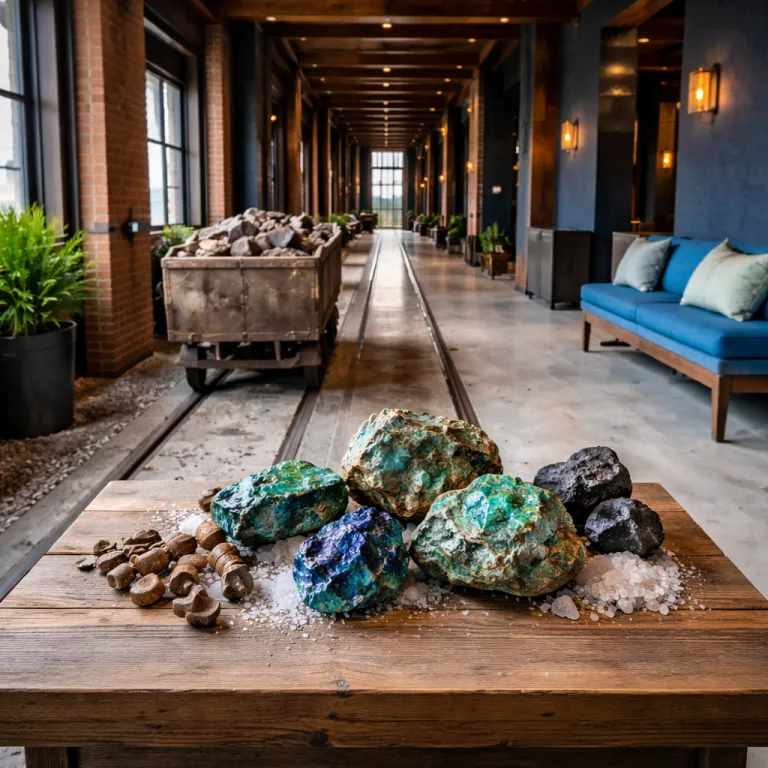
From steam mills to shafts: how Serbia reached its first mining hotel
Serbia’s first serious attempt at a mining-inspired hotel does not appear from nowhere. It grows from a decade of quiet experimentation in Belgrade, where adaptive reuse has already turned forgotten industrial land into credible hospitality. The Radisson Collection Hotel, Old Mill Belgrade, set in a converted nineteenth-century steam mill on Bulevar Vojvode Mišića, showed that a former factory can host a contemporary luxury hotel without losing its soul.
That Old Mill project used adaptive reuse, sustainable design and careful historical preservation to demonstrate how a working site can become a refined Belgrade hotel while still speaking clearly about industry and labour. In the language of travel and tourism, it was one of Serbia’s first confident statements that a hotel in an industrial building can be more than a themed sleepover, and it set the tone for the newer mining-hotel concept. When you walk through its brick corridors you feel how a serious hotel will keep the machinery of memory visible, rather than hiding it behind drywall and generic art.
Industrial-heritage tourism is now a recognised niche within global travel, usually defined as journeys focused on sites of historical industrial significance. Around Europe, former mills, kilns and power stations have become destinations, and the market has learned to distinguish between a thoughtful conversion and a stage set. Serbia enters this market relatively late, but that delay can be an advantage, because the mining sites that shape the new hotel projects in Belgrade and in the mining city of Bor are still within living memory, not distant museum pieces.
When travellers search for a mining hotel in Serbia today, they are not just looking for a bed near a mine. They are looking for a place to stay that can translate the country’s mining history into a layered experience, with design, service and storytelling that feel as precise as anything at an InterContinental or a Ritz-Carlton property. The Old Mill’s eco-conscious approach already answered one key question from the expert dataset directly: “Is the Old Mill Hotel eco-friendly? Yes, it incorporates sustainable design elements,” a claim echoed in Radisson Hotel Group sustainability communications and in public Green Key certification listings.
That commitment to sustainability matters because mining, energy and finance are politically charged topics in Serbia, where the state, each mining company and every foreign partner is scrutinised closely. A credible mining-themed hotel project must show that its energy use, its materials and even its spa and swimming pool are not greenwashed accessories but part of a broader shift in the energy industry. When a hotel in Belgrade references mining, it steps into a national conversation about land, investments, jobs and the balance between tourism and heavy industry.
Globally, serious industrial-heritage hotels such as Castello di Reschio in Italy or La Corte di Matera in Basilicata have set the bar high. They prove that a luxury hotel can sit on former working land and still feel intimate, with service that rivals any Swissôtel or InterContinental address, while remaining rooted in local stone, local wine and local stories. As Serbia’s first mining-focused hotel joins that conversation, it will be judged by the same standards of authenticity, financial transparency and respect for the communities that built the original sites.
Mining, memory and luxury: why Serbia’s industrial past is an asset, not a theme
The word mining carries weight in Serbia, especially in places like Bor where copper extraction has shaped the city, the land and the local economy for generations. When a new hotel concept borrows that vocabulary, it cannot treat mining as a decorative theme. It has to engage with the reality of how a mining company, a state partner and a foreign investor such as Zijin Mining have transformed entire regions.
In Bor, the presence of Serbia Zijin Copper, often shortened to Serbia Zijin, has brought new finance, new energy projects and new jobs, but also new questions about environmental standards and who really benefits from investments. Reports by organisations such as Bankwatch Network and local environmental groups have documented concerns about air quality, water use and tailings management, while company sustainability reports highlight investments in cleaner technology and community programmes. A hotel that positions itself as part of this mining story steps directly into this debate, whether it sits in Belgrade, Bor or another city linked to the energy industry. Guests who follow business news and energy-sector analysis will arrive with clear opinions about Zijin, about owned Zijin subsidiaries and about how the state regulates the sector.
Handled with care, this tension can become a strength for a mining-heritage luxury hotel. Instead of hiding the connection, a thoughtful property will curate small exhibitions about the history of mining in Serbia, from early shafts to the modern Serbia Zijin era, and invite local historians, museum curators or retired engineers to lead short talks or walks. As one Belgrade-based guide put it during a recent heritage tour, “People don’t come here just to sleep; they come to understand how copper and coal shaped our lives.” That is how a hotel turns industrial heritage into a living conversation, not a frozen display, and it is exactly the kind of programming that appeals to solo explorers who want more than a standard star-hotel experience.
There is a risk of caricature, of course. Industrial heritage is easy to reduce to Pinterest theatre, with a few rusted tools on the wall and a cocktail named after a famous mine, and some hotels Belgrade-wide have already flirted with that approach. Serbia’s first true mining-inspired luxury property must resist this temptation and instead follow the more rigorous path seen in serious heritage stays, such as the castle conversions covered in our guide to luxury castle stays in Serbia. Those properties work because they treat history as a framework for service, not as a costume.
Mining also intersects with the energy industry and with national debates about energy security, which means any mining hotel in Serbia will inevitably touch on questions of energy transition. A property that uses efficient systems, sources part of its power from renewables and communicates clearly about its finance and energy decisions will feel more credible to a generation of travellers who read both lifestyle media and business news. In this sense, the emerging mining-hotel model becomes a small case study in how tourism, energy and finance can align on a single site.
For guests, the reward is a stay that feels specific to Serbia rather than interchangeable with a Ritz-Carlton, a Falkensteiner Hotel or a Swissôtel in another country. You might check into a hotel Belgrade-side that references the copper seams of Bor in its art, or a banja Serbia retreat in Vrnjačka Banja that nods to the region’s mineral wealth in its spa rituals, and each will tell a different chapter of the same national story. That is the promise of industrial-heritage luxury when it is handled with respect, and it is why the mining-hotel format has more depth than a passing trend.
Where a mining hotel fits in Serbia’s wider luxury map
To understand the role of a mining-themed hotel, you need to see it against the wider map of Serbian luxury travel. Belgrade remains the primary gateway, with a growing constellation of hotels Belgrade-side that range from riverside design addresses to reimagined modernist icons such as Hotel Jugoslavija. Each Belgrade hotel offers a different lens on the city, from Sava river sunsets to New Belgrade’s post-war grid.
In this context, a mining-influenced hotel in Belgrade adds a fresh narrative layer. Instead of competing directly with an InterContinental-style tower or a glass-fronted business hotel Belgrade guests already know, it speaks to travellers who want their stay to reference the country’s industrial backbone. For a solo explorer, that means you can spend the day tracing Habsburg heritage in Novi Sad and Petrovaradin, as outlined in our Habsburg heritage weekend guide, then return to a room whose design language quietly nods to ore, steel and energy.
Beyond the capital, the geography of mining and spa culture overlaps in interesting ways. Towns such as Bor, with its copper pits, and Vrnjačka Banja, the best-known banja Serbia spa town, sit within landscapes shaped by both extraction and healing waters. A future network of mining-inspired hotels and spa hotels in Vrnjačka Banja could connect these stories, offering itineraries where you move from a hotel near an active or former site to a thermal retreat that uses mineral-rich water in its swimming pool and wellness rituals.
For the market, this is where things become strategically interesting. Serbia’s tourism planners know that four million tourists a year is only a starting point, and that the next phase of growth will come from niche segments such as industrial-heritage tourism and experiential luxury travel. According to the National Tourism Organisation of Serbia, the country welcomed around four million international arrivals in 2019, before the pandemic, and even a modest shift of this volume toward heritage-focused stays would significantly boost demand for a mining-heritage hotel.
There is also a business logic here that goes beyond aesthetics. Industrial sites often sit on valuable land close to city centres or major transport routes, which means a mining hotel can unlock underused areas without pushing into untouched countryside. When the state, a municipality and a private company collaborate on such a project, the finance, the investments and the long-term tourism strategy must align, or the result will feel like a short-term real-estate play rather than a serious hospitality asset.
For travellers, the practical question is simple: where does a mining-focused stay fit into an itinerary that might also include a Danube cruise or a rural wine trip. Our coverage of how Kladovo is opening up to river-cruise guests, in the article on quieter eastern Serbia on the Danube, shows how industrial river ports are already becoming tourism gateways. A mining-themed hotel in Belgrade or Bor can anchor the urban leg of such a trip, offering a narrative counterpoint to the baroque facades of Novi Sad and the fortress walls of Petrovaradin.
How to read a mining hotel: signals for serious travellers
When you book a Serbia mining hotel, you are not just choosing a place to sleep. You are choosing a point of view on how Serbia handles its past, its energy future and its tourism ambitions. That means you should read the property with the same critical eye you would bring to a finance report or a piece of business news.
Start with the basics: who owns the hotel, and how is that ownership framed. If the property sits on land linked to a mining company or an owned Zijin subsidiary, does the hotel communicate openly about that relationship, or does it hide behind generic branding. Transparency about the role of the state, the company and any foreign partner such as Zijin Mining or Serbia Zijin is a first indicator that this is a serious project, not a soft-power exercise.
Next, look at how mining appears in the design language. A thoughtful conversion will reference mining tools, shafts and ore in subtle ways, through textures, materials and art, rather than through costume-like props. Public spaces might echo the scale of a shaft or a processing hall, while rooms remain calm, with the kind of quiet luxury you would expect from a top-tier star hotel in any capital city.
Programming is another key signal. Does the hotel offer guided walks in former industrial areas, talks with local historians or visits to museums that explain how mining shaped Belgrade, Bor and other cities. Or does it rely on a spa, a swimming pool and a generic restaurant menu that could sit in any hotel Belgrade-wide. For a solo explorer, the difference between a hotel that curates context and one that simply sells comfort is the difference between a story worth telling and a stay you forget within a week.
Finally, consider how the property positions itself within Serbia’s broader tourism ecosystem. A credible mining hotel will reference other heritage experiences, from castle stays to spa towns such as Vrnjačka Banja, and will help you connect urban nights in Belgrade with rural days in mining or energy landscapes. It will speak fluently about the energy industry, about how tourism can coexist with extraction, and about why this particular city, this particular area and this particular piece of land matter.
In that sense, Serbia’s first mining hotel is less a novelty than a test case. If it succeeds, it will show that the next phase of luxury travel belongs to properties that could only exist in one place, shaped by one history and one community, rather than to interchangeable brands chasing the same market segment from Belgrade to Beijing. As more hotels Belgrade-side and across the country experiment with industrial heritage, the travellers who ask sharper questions will help decide which projects become new landmarks and which fade as themed curiosities.
Key figures shaping Serbia’s industrial heritage travel
- Serbia welcomed around four million international tourists in 2019, according to the National Tourism Organisation of Serbia, and even a small shift of this volume toward industrial-heritage tourism would significantly boost demand for a Serbia mining hotel.
- The Radisson Collection conversion of the Old Mill in Belgrade, on Bulevar Vojvode Mišića, is widely cited by tourism boards and architecture awards as a flagship example of adaptive reuse, showing how one former industrial site can anchor an entire neighbourhood’s hospitality offer.
- Industrial-heritage tourism and experiential luxury travel are now recognised by European tourism bodies such as the European Travel Commission as high-value segments, with visitors typically spending more per day than mass-market city-break travellers, which strengthens the business case for mining-themed luxury hotels in Serbia.